
Meet Our Heroes
Barry
The Dog Who Found the Way Home
c. 1800–1814 | Alpine Rescue | Great St. Bernard Pass
High in the Swiss Alps, there is a mountain pass where winter can erase the road.
For centuries, travelers crossed the Great St. Bernard Pass on foot, making their way between Switzerland and Italy through deep snow, bitter cold, sudden storms and heavy fog.
Near the highest point of the pass stood a hospice.
It offered travelers something desperately important.
Shelter.
And around the year 1800, among the dogs living and working there was one named Barry.
He would become one of the most famous rescue dogs in history.
The Dogs of the Mountain
Dogs had lived at the Great St. Bernard Hospice for generations.
Long before helicopters, radios or modern search-and-rescue teams, the people of the hospice ventured onto the mountain to help travelers who had become lost or stranded.
The dogs went with them.
Strong, sure-footed and accustomed to the Alpine environment, these dogs were the ancestors of what would eventually become known as the St. Bernard.
Barry would have looked different from the enormous St. Bernards familiar today.
He was smaller and more athletic—a working mountain dog built to move through difficult terrain.
For approximately twelve years, that was Barry's life.
Into the Snow
Winter on the Great St. Bernard Pass could make an already dangerous journey deadly.
Fresh snow could bury the trail.
Fog could erase familiar landmarks.
Cold could overwhelm a traveler who had lost the way.
So the people of the hospice and their dogs went looking.
Barry went with them.

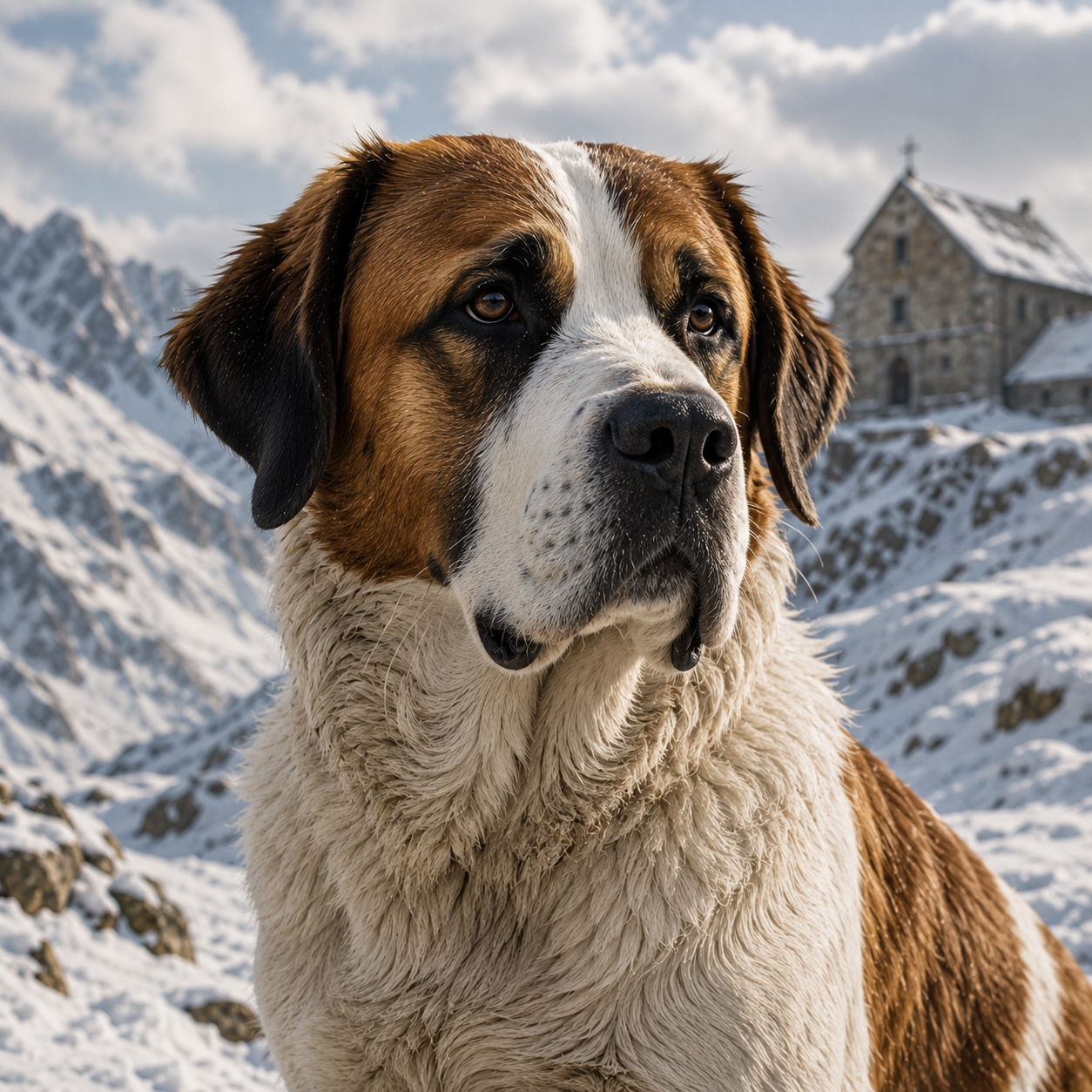
A historical reconstruction of the mountain rescue work Barry and the hospice dogs performed.
The dogs' familiarity with the mountain, their ability to travel through difficult snow and their extraordinary senses made them invaluable companions during these journeys.
Barry became particularly famous.
Historical tradition credits him with helping save more than 40 people during his years at the Great St. Bernard Pass.
Detailed records of Barry's individual rescues were not kept, so the names of those travelers and the circumstances of each rescue have largely disappeared.
But Barry's reputation did not.
Even during his own lifetime, he became known as an extraordinary working dog of the mountain.
The Dog Behind the Legend
As Barry's fame spread beyond the Alps, stories began to grow around him.
One claimed that he discovered a freezing child and carried the child back to the hospice on his back.
Another gave Barry the small barrel of brandy that would eventually become one of the most recognizable symbols of the St. Bernard.
And another claimed that after saving 40 people, Barry approached one final stranded traveler who mistook him for a wolf and killed him.
The stories became famous.
But history tells us something different.
There is no reliable evidence that Barry carried a brandy barrel. The famous child rescue cannot be verified. And Barry was not killed during a final rescue.
The real Barry didn't need those legends.
His actual life was remarkable enough.
Twelve Years on the Mountain
By 1812, Barry was growing old.
He had spent approximately twelve years accompanying the people of the hospice into one of Europe's harshest mountain environments.
Eventually, his working days came to an end.

After years of service on the mountain, Barry was taken to Bern and cared for in retirement.
Barry left the Great St. Bernard Pass and was taken to Bern, where he was cared for in retirement.
For another two years, the old rescue dog lived away from the snow and storms that had defined most of his life.
Barry died in 1814.
Not beneath an avalanche.
Not while attempting one final rescue.
After years of service, Barry was allowed to grow old.
A Legacy That Endures
Barry's story did not disappear with him.
His body was preserved and became part of the collection of the Natural History Museum in Bern, where he remains more than two centuries later.
His reputation helped shape the image of the Alpine rescue dog around the world.
The dogs of the Great St. Bernard Hospice eventually became known as St. Bernards, and generations later they developed into the much larger dogs familiar today.
But Barry's name endured.
The tradition of giving the name Barry to a dog of the historic St. Bernard line continued in his honor.
Today, an organization dedicated to preserving these dogs and their heritage bears his name.
And the working dog who once walked into the Alpine snow became an enduring symbol of rescue.
The Real Barry
Time changed Barry's story.
Artists gave him a barrel.
Storytellers gave him dramatic rescues.
Legend gave him a heroic death.
But Barry never needed any of them.
Around the beginning of the nineteenth century, when travelers disappeared into the snow high in the Alps, people left the safety of the hospice and went looking for them.
Dogs walked beside them.
And for approximately twelve years, one of those dogs was Barry.
He helped search for people he had never met.
He worked beside rescuers who ventured into the mountains to bring strangers home.
And when his work was finished, Barry came down from the pass and was allowed to grow old.
More than two hundred years later, we still remember his name.
The legend changed.
Barry's service did not.
His Legacy
Barry
Alpine Rescue Dog
Great St. Bernard Pass
Service: c. 1800–1812
Retired: Bern, Switzerland
Died: 1814
Credited: Helping save more than 40 people
Legacy: An enduring symbol of Alpine rescue and the St. Bernard tradition